The Three Interconnected Processes
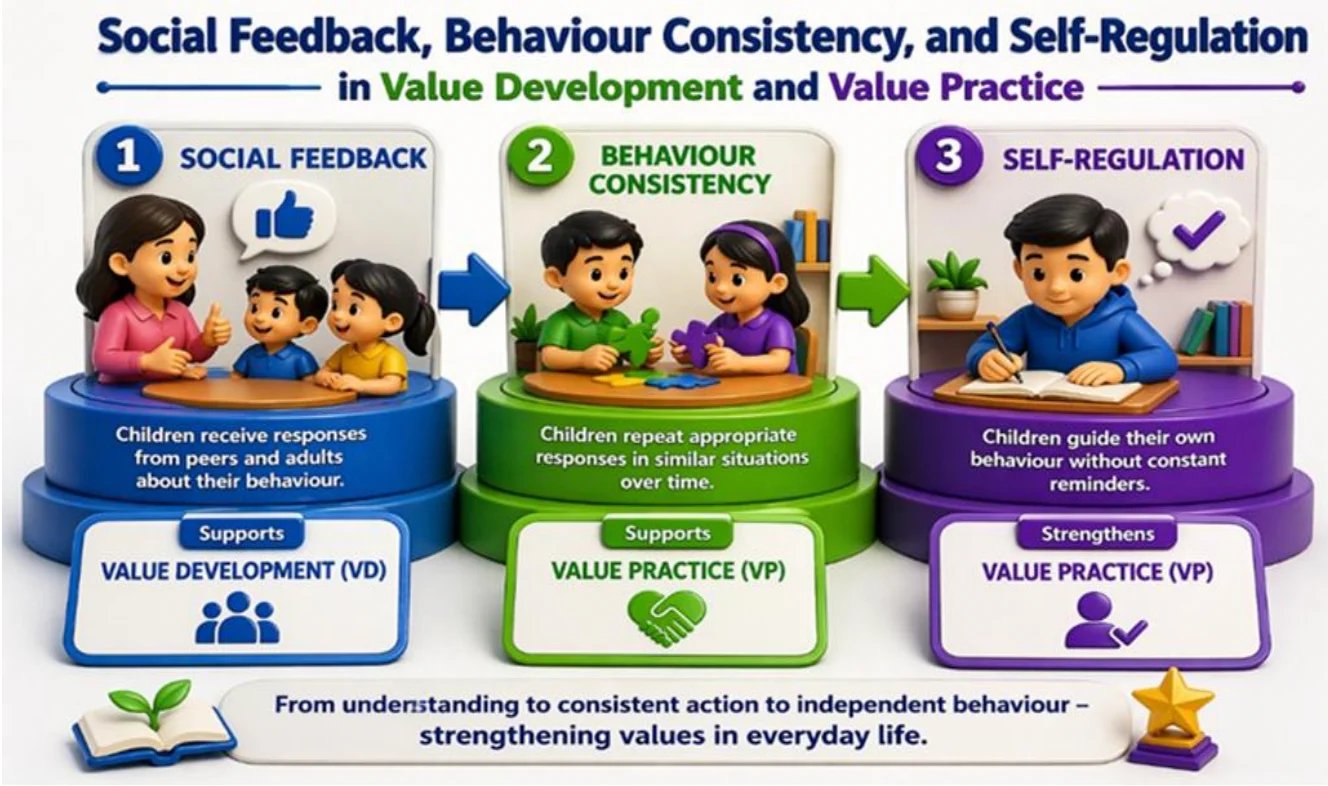
Social Feedback → Behaviour Consistency → Self-Regulation
Social feedback, behaviour consistency, and self-regulation are interconnected processes that support Value Development and Value Practice in children's everyday social and classroom experiences.
These processes help children move from externally guided participation toward increasingly self-guided and socially responsible behaviour — gradually strengthening value-oriented participation across school, family, peer, and community situations.
Social feedback refers to the responses children receive from peers, teachers, parents, and others during interaction — including appreciation, encouragement, correction, guidance, acceptance, or disapproval. Through such feedback, children begin to recognise how their behaviour affects others and whether their responses match shared expectations.
Social feedback helps children:
Recognise appropriate and inappropriate responses
Understand shared expectations in group situations
Improve participation behaviour through guidance and encouragement
Strengthen value-based responses like cooperation, responsibility, and respectful interaction
When a child waits for its turn during a group activity and receives appreciation from classmates or the teacher, the child gradually understands that patience and cooperation are valued in group interaction — and is more likely to repeat such behaviour in future situations.
Behaviour consistency refers to the repeated demonstration of appropriate responses across similar situations over time. As children continue to participate in classroom, peer, and group activities, repeated practice strengthens stability in behaviour and improves their readiness to respond appropriately across contexts.
Behaviour consistency helps children:
Strengthen predictable and reliable participation behaviours
Apply appropriate responses across different situations
Improve adjustment to shared group expectations and people with different mindsets
Extend value practice beyond individual activities
A student who regularly shares materials during group work gradually begins to show the same cooperative behaviour across different classroom and social situations in different contexts like home, school, and community.
Self-regulation refers to the child's developing ability to manage behaviour independently in response to social expectations without relying on constant reminders from others. Through repeated participation experiences, children gradually learn to guide their own behaviour in everyday situations.
Self-regulation helps children:
Manage emotional and behavioural responses during interactions
Improve value-based behaviours like cooperation, turn-taking, and respectful communication
Make responsible decisions in social situations
Strengthen independent value-based behaviour
A child chooses to speak respectfully during discussions even when the teacher is not monitoring closely. This reflects the gradual strengthening of self-regulated value practice in everyday interaction.
The Three Interconnected Processes
Social Feedback → Behaviour Consistency → Self-Regulation
Reflect on these questions to evaluate how well your classroom supports these interconnected processes:
Are students receiving feedback from peers and teachers about how their behaviour affects others in given situations?
Do classroom activities provide repeated opportunities for students to practise values such as cooperation, responsibility, and participation?
Do school routines create situations where value awareness can become value practice through participation?
Is designed to create structured participation contexts in which social feedback, behaviour consistency, and self-regulation work together — supporting children's gradual movement from externally guided participation toward independent, value-guided behaviour.
Social Feedback
Behaviour Consistency
Self-Regulation