Home & School Environments
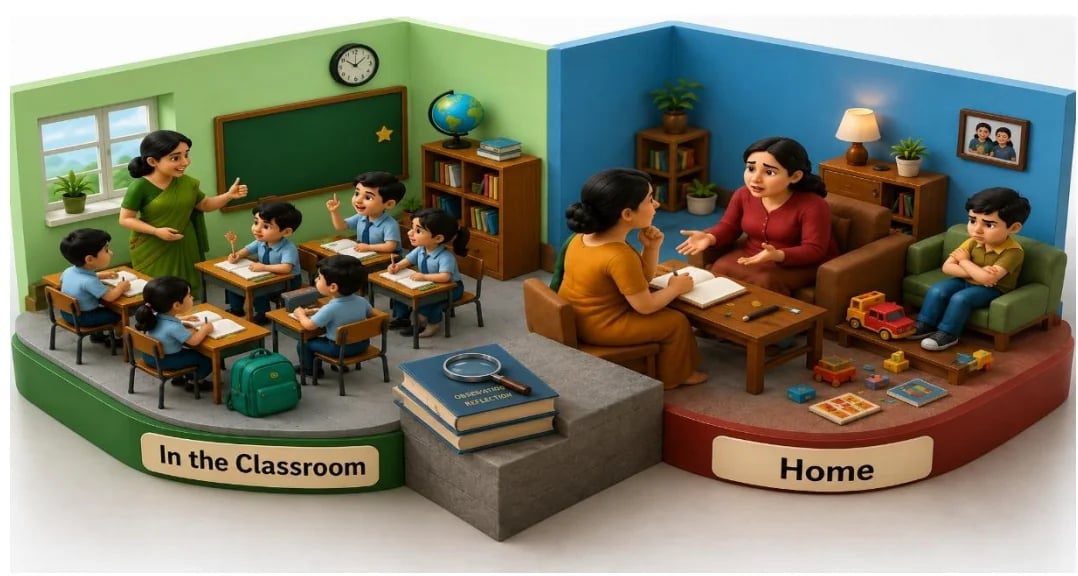
Home and school — two environments that shape children's value development
Children's values do not develop in isolation. They gradually evolve through everyday experiences across three major environments: Home, School, and Community.
Together, these environments create the conditions through which children learn to recognise values, respond to situations, participate responsibly, and gradually practise value-guided behaviour in everyday life.
During my early years as a primary school teacher, I had the opportunity to closely observe children in classroom situations over nearly a decade. Many students appeared attentive, cooperative, respectful, and responsible within the school environment.
However, through continued interaction with parents, I gradually realised that some of these same children were often perceived differently at home — parents described difficulties related to cooperation, responsibility, attentiveness, and behaviour management within family situations.
This contrast led me to reflect more deeply on how different contexts influence children's value development and value practice — raising important questions about why children respond differently across environments.
This inquiry later encouraged systematic academic study and research in Parent Education at the M.Ed. and Ph.D. levels, contributing to a broader exploration of the role of home, school, and community in children's value development and practice.
Home & School Environments
Home and school — two environments that shape children's value development
Children first become aware of values through relationships and experiences in their surroundings. However, awareness alone is not sufficient. Values become meaningful when children:
When similar expectations are experienced across home, school, and community environments, children gradually develop greater behavioural consistency and social responsibility.
Home, School, and Community — each with a distinct role in value development and practice
Home is the child's first social and emotional learning environment. Daily experiences help children gradually develop values such as respect, sharing, honesty, responsibility, and cooperation.
Experience care, trust, fairness, and responsibility
Observe how adults respond to situations
Participate in daily routines and relationships
Understand how behaviour affects others
School provides structured opportunities for participation, interaction, cooperation, and behavioural adjustment within group situations. It especially supports value practice when children are given independent responsibilities.
Cooperate with peers and follow shared procedures
Take responsibility for tasks independently
Work in groups and make decisions
Reflect on behaviour and consequences
The community extends children's experiences beyond home and school, enabling them to observe how behaviour functions within wider social life and public settings.
Recognise social responsibility in public situations
Respond respectfully to people of different roles
Observe cooperation and mutual support in society
Connect behaviour with social belonging
How each element supports value development and practice
| Element | What It Includes | How It Supports Value Development and Practice |
|---|---|---|
| People | Parents, teachers, peers, elders, community members | Children observe behaviour, receive guidance, and learn through interaction with others in everyday situations |
| Contexts | Family routines, classroom participation, peer interaction, shared responsibilities, neighbourhood experiences | These situations provide opportunities for children to participate, practise behaviour, and respond to real-life social situations |
| Purpose | Maintaining relationships, participating responsibly, solving social difficulties, acting independently in meaningful situations | Understanding why values matter strengthens children's readiness and motivation to practise them across situations |
Parents, teachers, peers, elders, community members
Children observe, receive guidance, and learn through interaction
Family routines, classroom participation, peer interaction
Situations provide opportunities to practise behaviour
Maintaining relationships, participating responsibly
Understanding why values matter strengthens readiness to practise
The Three Environments
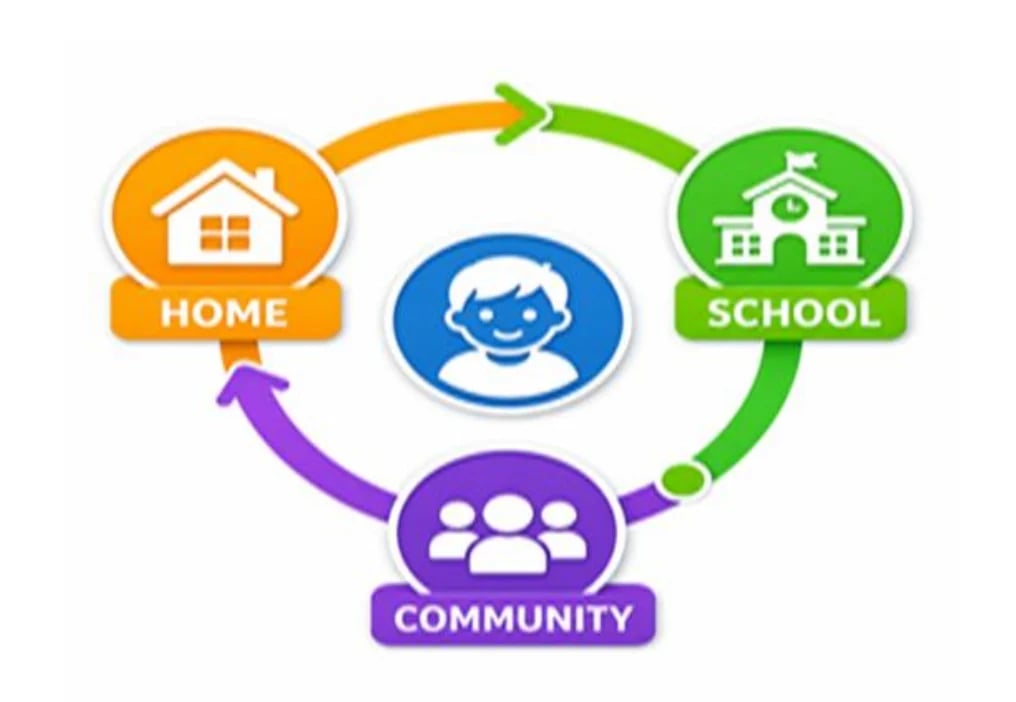
Home, School, and Community — surrounding the child at the centre
When children experience continuity across environments, they gradually develop greater behavioural consistency and readiness to act independently based on values.
Recognise appropriate behaviour across situations
Respond more confidently in social interactions
Adjust behaviour according to context
Develop responsibility through participation
Begin to act more independently based on values
Such continuity supports children's gradual movement from value awareness toward value-guided participation, behavioural practice, and long-term internalisation.
As you reflect on your role in children's value development, consider these questions:
Do I recognise that children's behaviour may differ across home, school, and community environments?
Do I create classroom situations where students can participate, cooperate, and take responsibility — not merely learn about values theoretically?
Do I provide opportunities for students to act responsibly even without direct supervision?
Do I help students understand why values are important in everyday social situations?
Is designed to create structured participation contexts that bridge home, school, and community — giving children repeated opportunities to recognise values, practise them in real situations, and develop consistent value-guided behaviour across environments.
Home
School
Community